
Our Short List of 3

- Best for: Travel and everyday shooting with a single lens.
- Focal length: 24-120mm, FX format, Nikon Z mount
- Maximum aperture: constant f/4; minimum aperture f/22
- Autofocus: dual STM stepping motors
- Minimum focus distance: 1.15 ft (0.35 m) across the zoom range
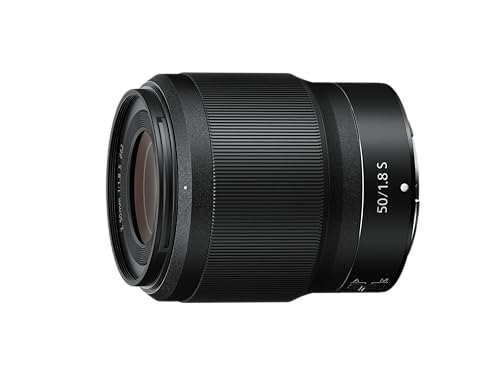
- Best for: Low-light shooting and a first fast prime.
- Focal length: 50mm, FX format, Nikon Z mount
- Maximum aperture: f/1.8; minimum aperture f/16
- Lens construction: 12 elements in 9 groups, including 2 ED and 2 aspherical elements
- Autofocus: stepping motor drive with customizable control ring

- Best for: Portraits, headshots and wedding detail work.
- Focal length: 85mm, FX format, Nikon Z mount
- Maximum aperture: f/1.8; minimum aperture f/16
- Lens construction: 12 elements in 8 groups, including 2 ED elements
- Diaphragm: 9-blade rounded diaphragm; electromagnetic aperture control
All 5 Picks at a Glance
| Product | Specs | Action |
|---|---|---|
| Nikon NIKKOR Z 24-120mm f/4 S |
| Check price on Amazon |
| Nikon NIKKOR Z 50mm f/1.8 S |
| Check price on Amazon |
| Nikon NIKKOR Z 85mm f/1.8 S |
| Check price on Amazon |
 Nikon NIKKOR Z 14-30mm f/4 S |
| Check price on Amazon |
 Nikon NIKKOR Z 70-200mm f/2.8 VR S |
| Check price on Amazon |
Key takeaways
- Compare the best Nikon Z mirrorless lenses for full-frame Z cameras: an all-in-one zoom, two fast primes, an ultra-wide zoom and a pro telephoto.
The hard part of building a Nikon Z kit is not finding a good lens — it is deciding which focal lengths earn space in your bag first. A standard zoom covers most days, yet it cannot match a fast prime after dark, and no mid-range zoom reaches the compressed perspective a portrait or sports shooter wants. Picking the wrong first lens usually means buying twice.
This guide is for full-frame Z owners — Z5, Z6, Z7, Z8 and Z9 shooters — choosing their first upgrades or rounding out a working kit. Every pick below is a native Nikon Z-mount lens, selected from its Amazon listing details: focal range, aperture, focus system, filter size and weight, so you can compare the numbers that actually shape daily shooting.
Quick Picks
As an Amazon Associate we earn from qualifying purchases
| Product | Best for | Key spec from title |
|---|---|---|
| Nikon NIKKOR Z 24-120mm f/4 S | One-lens travel and everyday shooting | 24-120mm zoom with constant f/4 aperture |
| Nikon NIKKOR Z 50mm f/1.8 S | Low light and first prime lens | 50mm prime with f/1.8 maximum aperture |
| Nikon NIKKOR Z 85mm f/1.8 S | Portraits and headshots | 85mm prime with f/1.8 maximum aperture |
| Nikon NIKKOR Z 14-30mm f/4 S | Landscapes and interiors | 14-30mm ultra-wide zoom, constant f/4 |
| Nikon NIKKOR Z 70-200mm f/2.8 VR S | Sports, weddings and events | 70-200mm telephoto with constant f/2.8 and VR |
How to Choose
Start with focal length, not aperture
Focal length decides what a lens can photograph at all, while aperture only decides how it handles light and depth of field. Map your subjects first: interiors and sweeping landscapes live below 24mm, street and family life cluster between 35mm and 50mm, and portraits, sports and wildlife start at 85mm and run long. A common pattern is one zoom for range plus one prime for the focal length you shoot most. Buying aperture before coverage leaves gaps no fast glass can fix.
Constant aperture versus variable aperture
A constant-aperture zoom such as an f/4 or f/2.8 design holds its widest aperture across the whole range, so exposure stays put while you reframe and video clips do not brighten or darken mid-zoom. Variable-aperture zooms shrink the opening as you extend, which matters most indoors and at dusk. Primes sidestep the question entirely: a 50mm f/1.8 gathers far more light than any f/4 zoom at the same focal length, which is why one fast prime complements a mid-range zoom so well.
Stabilization: lens VR or body IBIS
Full-frame Nikon Z bodies carry in-body stabilization, so a lens without its own VR still gets shake correction — the 24-120mm f/4 S and the f/1.8 primes rely on exactly that arrangement. A telephoto is different: at 200mm, in-lens VR tuned to the longer focal length works harder, and the 70-200mm f/2.8 VR S adds its own stabilization rated at up to 5.5 stops. Check whether your chosen lens lists VR in its name before assuming it is built in.
Size, filter size and sealing
Weight decides whether a lens travels or stays home. The primes here weigh under 500 g each, while the 70-200mm f/2.8 VR S is roughly three times that, so bag planning matters. Filter size is a running cost too: these five lenses use 62mm, 67mm, 77mm and 82mm threads, meaning one shared filter set will not fit all of them. Finally, every lens in this guide is an S-Line model with dust and drip resistance, which suits outdoor work but still is not waterproofing.
The 5 Best Options
Nikon NIKKOR Z 24-120mm f/4 S
- Best for: Travel and everyday shooting with a single lens.
- Focal length: 24-120mm, FX format, Nikon Z mount
- Maximum aperture: constant f/4; minimum aperture f/22
- Autofocus: dual STM stepping motors
- Minimum focus distance: 1.15 ft (0.35 m) across the zoom range
Travel and everyday shooting with a single lens.
No built-in VR — stabilization comes from the camera body, and f/4 limits very low-light work compared with a prime.
If one lens has to handle a trip, a family weekend and the occasional paid shoot, this is the sensible default. The 24-120mm range stretches from wide interiors to short-telephoto portraits without a lens change, and the constant f/4 aperture keeps exposure steady while zooming — a real benefit for video. Close focusing down to 1.15 feet across the range adds detail shots most standard zooms cannot reach. At 1.39 pounds it stays carryable all day, which is why many Z owners treat it as the lens that simply lives on the camera.
Nikon NIKKOR Z 50mm f/1.8 S
- Best for: Low-light shooting and a first fast prime.
- Focal length: 50mm, FX format, Nikon Z mount
- Maximum aperture: f/1.8; minimum aperture f/16
- Lens construction: 12 elements in 9 groups, including 2 ED and 2 aspherical elements
- Autofocus: stepping motor drive with customizable control ring
Low-light shooting and a first fast prime.
Fixed focal length means zooming with your feet, and there is no VR in the lens itself.
Every Z kit benefits from one fast prime, and the 50mm f/1.8 S is the obvious candidate. Its f/1.8 aperture opens up evening street scenes, indoor family photos and shallow depth of field that an f/4 zoom cannot reproduce, while the field of view matches how scenes look to the eye, making composition intuitive for newer shooters. Despite the S-Line badge it stays compact at about 415 g, so it disappears into a small bag. Photographers who mostly shoot people and daily life often find this becomes their most-used lens.
Nikon NIKKOR Z 85mm f/1.8 S
- Best for: Portraits, headshots and wedding detail work.
- Focal length: 85mm, FX format, Nikon Z mount
- Maximum aperture: f/1.8; minimum aperture f/16
- Lens construction: 12 elements in 8 groups, including 2 ED elements
- Diaphragm: 9-blade rounded diaphragm; electromagnetic aperture control
Portraits, headshots and wedding detail work.
No image stabilization in the lens, and 85mm is too tight for small rooms or group shots.
Portrait shooters gravitate to 85mm for good reason: the working distance flatters faces, keeps you out of the subject’s space and compresses backgrounds into soft separation at f/1.8. This S-Line version pairs that classic framing with an electromagnetic diaphragm for consistent exposures during bursts and a control ring that can take over aperture or exposure compensation. Wedding, headshot and family photographers who find a 70-200mm zoom heavy for all-day carry get much of the same look here at roughly a third of the weight, in a far smaller package.
Nikon NIKKOR Z 14-30mm f/4 S
- Best for: Landscapes, architecture and property interiors.
- Focal length: 14-30mm, FX format, Nikon Z mount
- Maximum aperture: constant f/4; minimum aperture f/22
- Lens construction: 14 elements in 12 groups, including 4 ED and 4 aspherical elements
- Autofocus: stepping motor (STM)
Landscapes, architecture and property interiors.
The barrel must be extended from its retracted position before shooting, and f/4 is limiting for handheld night-sky work.
Landscape, architecture and real-estate work all begin where standard zooms stop, and this ultra-wide covers 14mm without the bulbous front element that blocks filters on many rivals. It accepts ordinary 82mm screw-in filters, a practical advantage for polarizers and ND glass, and the barrel retracts when not in use so the widest lens in the bag is also one of the shortest. Constant f/4 keeps exposures predictable for interior video walkthroughs. At 485 g it suits hikers who count grams but still want full-frame width.
Nikon NIKKOR Z 70-200mm f/2.8 VR S
- Best for: Sports, weddings, events and stage photography.
- Focal length: 70-200mm, FX format, Nikon Z mount
- Maximum aperture: constant f/2.8; minimum aperture f/22
- Stabilization: built-in VR, up to 5.5 stops
- Lens construction: 21 elements in 18 groups, including SR, ED and fluorite elements
Sports, weddings, events and stage photography.
It is the largest and heaviest lens in this guide, and a newer S II version also exists, so confirm which model a listing describes before ordering.
This is the professional telephoto of the system: a constant f/2.8 aperture for indoor sports and evening events, in-lens VR rated up to 5.5 stops, and the reach that sideline, stage and ceremony work demands. Dual focus groups keep autofocus quick at both ends of the range, and the lens accepts Nikon’s Z teleconverters when 200mm is not enough. It is a serious commitment in size and weight — 1,440 g with a removable tripod collar — but for photographers whose income depends on telephoto work, it is the anchor lens of a Z kit.
Which One Fits Your Situation
You travel light and want one lens on the camera
Take the 24-120mm f/4 S. Its range covers wide city scenes at 24mm, portraits near 85-120mm and close details at 1.15 feet, all at a constant f/4 and a weight that suits a full day on foot. Add the 50mm f/1.8 S later if evenings feel limited; together they form a compact two-lens travel kit.
You shoot portraits and family work for clients
Start with the 85mm f/1.8 S for its flattering distance and background separation, then cover ceremonies and groups with the 24-120mm f/4 S. If receptions and indoor venues dominate your bookings, the 70-200mm f/2.8 VR S becomes the better second lens, since its f/2.8 aperture and VR handle dim halls where f/4 struggles.
You photograph landscapes and buildings
The 14-30mm f/4 S is your foundation: true 14mm width, flat front element with an 82mm filter thread for polarizers, and a retractable barrel that packs small. Pair it with the 24-120mm f/4 S and the two lenses share the same f/4 workflow while covering 14mm through 120mm with a gap-free handoff at 24-30mm.
You cover sports, wildlife or events
Reach and aperture rule here, so the 70-200mm f/2.8 VR S leads. Its VR steadies handheld shooting at 200mm, f/2.8 keeps shutter speeds up indoors, and Z teleconverters extend it further for field sports and distant wildlife. Round out the kit with the 24-120mm f/4 S for everything happening closer than 70mm.
Common Mistakes
- Buying an F-mount lens for a Z body without budgeting for an FTZ adapter — and then discovering the adapter adds the size and cost you were trying to avoid.
- Assuming every Z lens has built-in VR; several S-Line primes and the 24-120mm f/4 S rely on the camera’s in-body stabilization instead.
- Ordering filters before checking each lens’s thread size — this guide alone spans 62mm, 67mm, 77mm and 82mm.
- Choosing a DX-format lens for a full-frame body without realising the camera crops the sensor area and discards resolution.
- Picking a fast prime for its aperture alone, then finding its fixed focal length does not match the subjects you actually shoot.
Frequently Asked Questions
Do these lenses work on Nikon DX bodies like the Z50 and Z fc?
Yes. Every lens here is a native Z-mount design, so it mounts directly on DX bodies and applies the crop factor to the field of view — the 50mm f/1.8 S frames like a 75mm lens, for example. Autofocus and exposure work normally. The reverse pairing is the compromise: DX lenses on full-frame bodies force a cropped image area.
What does the S-Line badge actually mean?
S-Line is Nikon’s premium tier within the Z range, held to stricter design and quality-control standards than the standard line. In practice it signals better optical correction, more complete dust and drip sealing, and features such as customizable control rings and higher-grade coatings. All five lenses in this guide carry the badge, which partly explains their positioning above kit lenses.
Can I use my old Nikon F-mount lenses instead of buying Z glass?
Often, yes, through Nikon’s FTZ or FTZ II adapter, which preserves autofocus with AF-S and AF-P lenses. It is a sensible bridge while you transition. The trade-offs are extra length and weight on every adapted lens, and screw-drive AF-D lenses lose autofocus entirely. Native Z lenses remain smaller and focus faster, so most photographers migrate gradually.
Which single lens should a new Z6 or Z7 owner buy first?
The 24-120mm f/4 S is the safest first purchase: one lens covers landscapes, travel, family and light portrait work at a constant aperture, so you learn which focal lengths you use most. If your shooting is mainly people in available light, start with the 50mm f/1.8 S instead and let your habits decide the second lens.
FAQ
Do these lenses work on Nikon DX bodies like the Z50 and Z fc?
What does the S-Line badge actually mean?
Can I use my old Nikon F-mount lenses instead of buying Z glass?
Which single lens should a new Z6 or Z7 owner buy first?
More from Amazon
Programs that pair well with the guide above. Offers and eligibility are set by Amazon and may change.
Free shipping on eligible items, Prime Video and more. Eligible new members can start with a free trial.
Start a Prime free trialAudiobooks and podcasts to listen to on the go. Eligible new members can start with a free trial.
Try Audible freeAd-free music streaming. Eligible new subscribers can start with a free trial.
Try Music Unlimited freeA free business account with business pricing and bulk-buying tools for work, shop or home office.
Create a business accountAs an Amazon Associate we earn from qualifying purchases.
Write Your Review
No reviews yet. Be the first to share your experience!